What's Left on Day 19
Two invasions, nineteen days and two hundred miles: King Harold's autumn of 1066, and what it says about team capacity.
Back-to-back escalations, 1066 edition.
On September 25, King Harold of England defeated a Norwegian invasion at Stamford Bridge after covering roughly 185 miles in about four days. On September 28, William of Normandy landed in Sussex. On October 14, Harold fought William at Hastings. William won and became William the Conqueror. Harold was killed. Nineteen days, two invasions, and more than 200 miles between the battlefields.
How his army got south is still debated. The classic version has an exhausted army marching the whole way. Marc Morris thinks the northern army was likely disbanded, and that Harold rode ahead with his household troops to raise a new one in London. Tom Licence, in a 2026 biography, argues for ships. Pick your version. The capacity question is the same: how much of the first team shows up for the second fight, and in what shape?
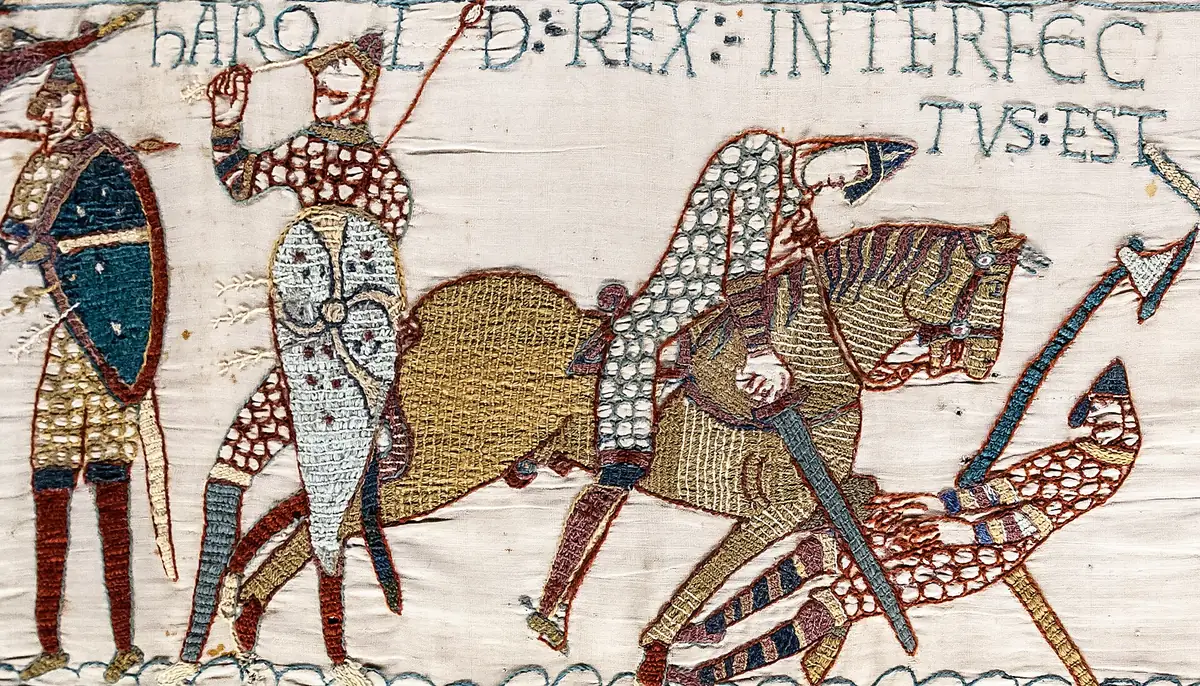
History has a point.
Any ops team knows the pattern. Escalation one closes at 4:00. Escalation two lands at 4:05. The dashboard says "resolved," and nobody asks what's left in the people. Response time gets measured. Recovery time rarely gets scheduled.
Harold didn't schedule either invasion. What he did decide was when to fight the second one. Morris has pointed out that time was working against William, whose supplies were limited. Sometimes the best capacity decision is not to start the second fight on the other side's schedule.
Capacity isn't what a team can do at full strength. It's what's left on day 19.
So, managers: consider what's left when determining what's possible. Treat vacation days and PTO as part of the capacity plan, not as a threat to it, and encourage people to take them before the second fire starts.
Sources
- Marc Morris, The Norman Conquest, Hutchinson, 2012 (US edition: Pegasus Books, 2013).
- Tom Licence, Harold: Warrior King, Yale University Press, 2026.
First shared on LinkedIn.