Fries. Waffles. Beer. All Belgian.
To all my fellow Americans swearing off waffles after the World Cup loss to Belgium: a quick history lesson before you say something you'll regret.
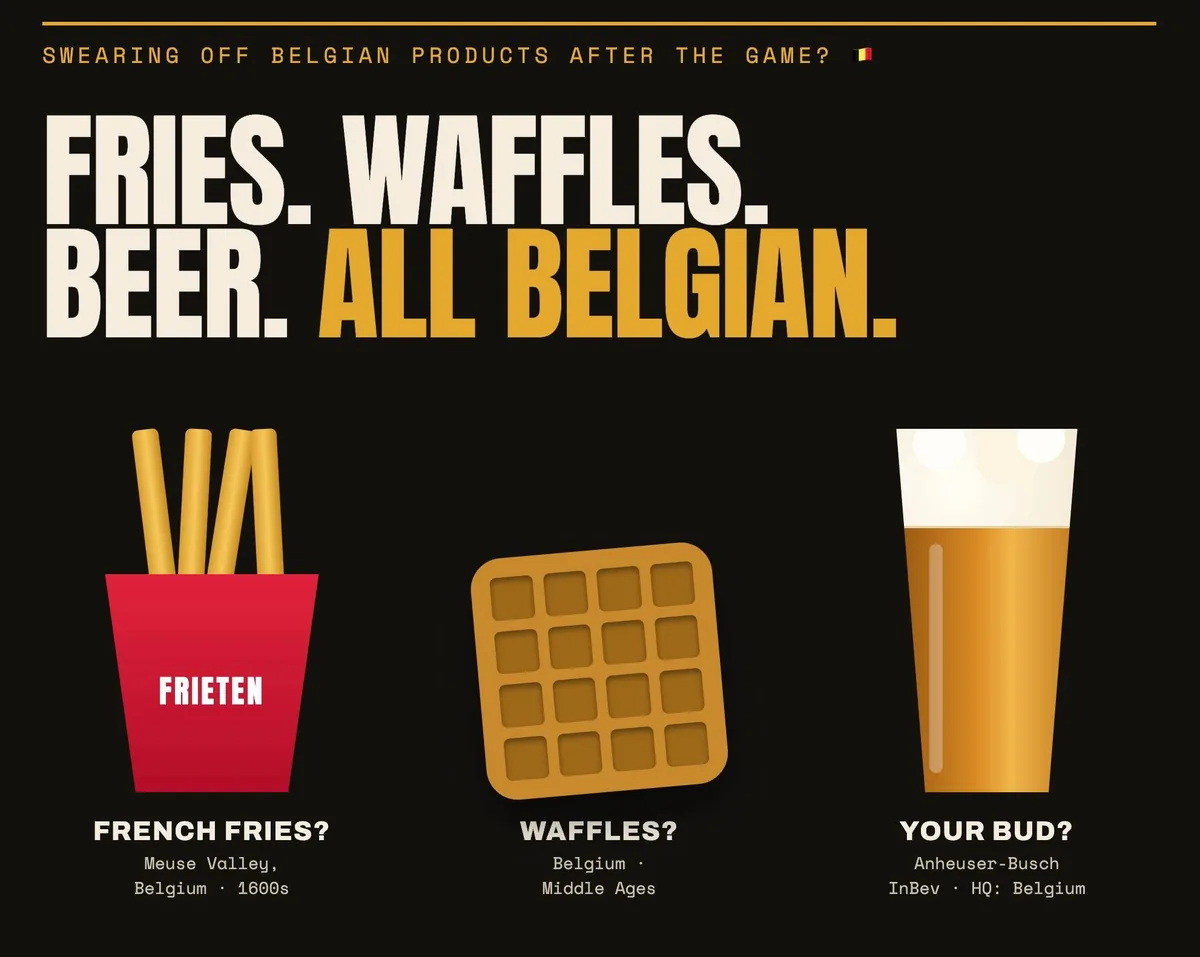
French fries? Belgian
The most popular story says that villagers in the Meuse Valley were frying up small fish as a staple food back in the late 1600s. When the river froze and they couldn't fish, they cut potatoes into fish-shaped strips and fried those instead. "French fries" likely comes from American WWI soldiers encountering them in French-speaking Belgium and assuming French = the language = the origin. The Belgians have a whole museum dedicated to defending their claim (the Frietmuseum in Bruges; very serious business).
Waffles? Belgian
Also Belgian, dating back to the Middle Ages. And here's the thing: there's no single "Belgian waffle." There's the light, crispy Brussels waffle and the dense, caramelized-sugar Liège waffle, both with centuries of their own history. The fluffy version you get at brunch didn't even show up in the US until the 1964 World's Fair. So you're not really offending anyone.
Budweiser? Belgian
And for the final gut punch: if you're drowning your World Cup sorrows in a Budweiser, America's beer, you should know that Anheuser-Busch InBev, the company that makes it, is headquartered in Leuven, Belgium. So is Stella Artois. So enjoy that Bud, courtesy of the country that just beat the US.
Waffles didn't beat the US. The Belgian midfield did.
First shared on Facebook.