The Field Had Other Plans
At Agincourt in 1415, the French had more men and more horses. What they didn't have was room.
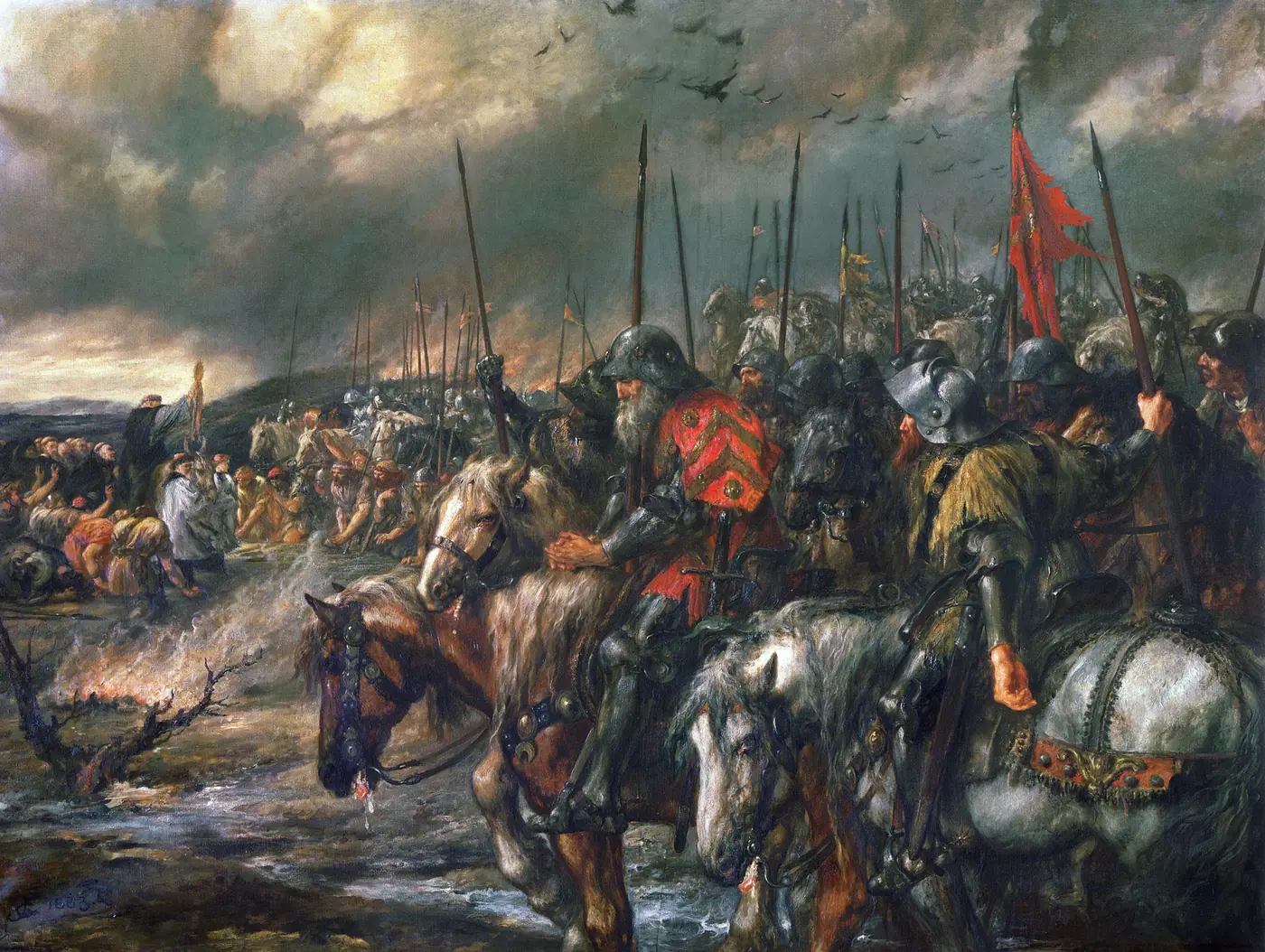
On October 25, 1415, a French army advanced across a rain-soaked, recently plowed field near Azincourt (Agincourt in English) and was defeated by a smaller, weaker English force.
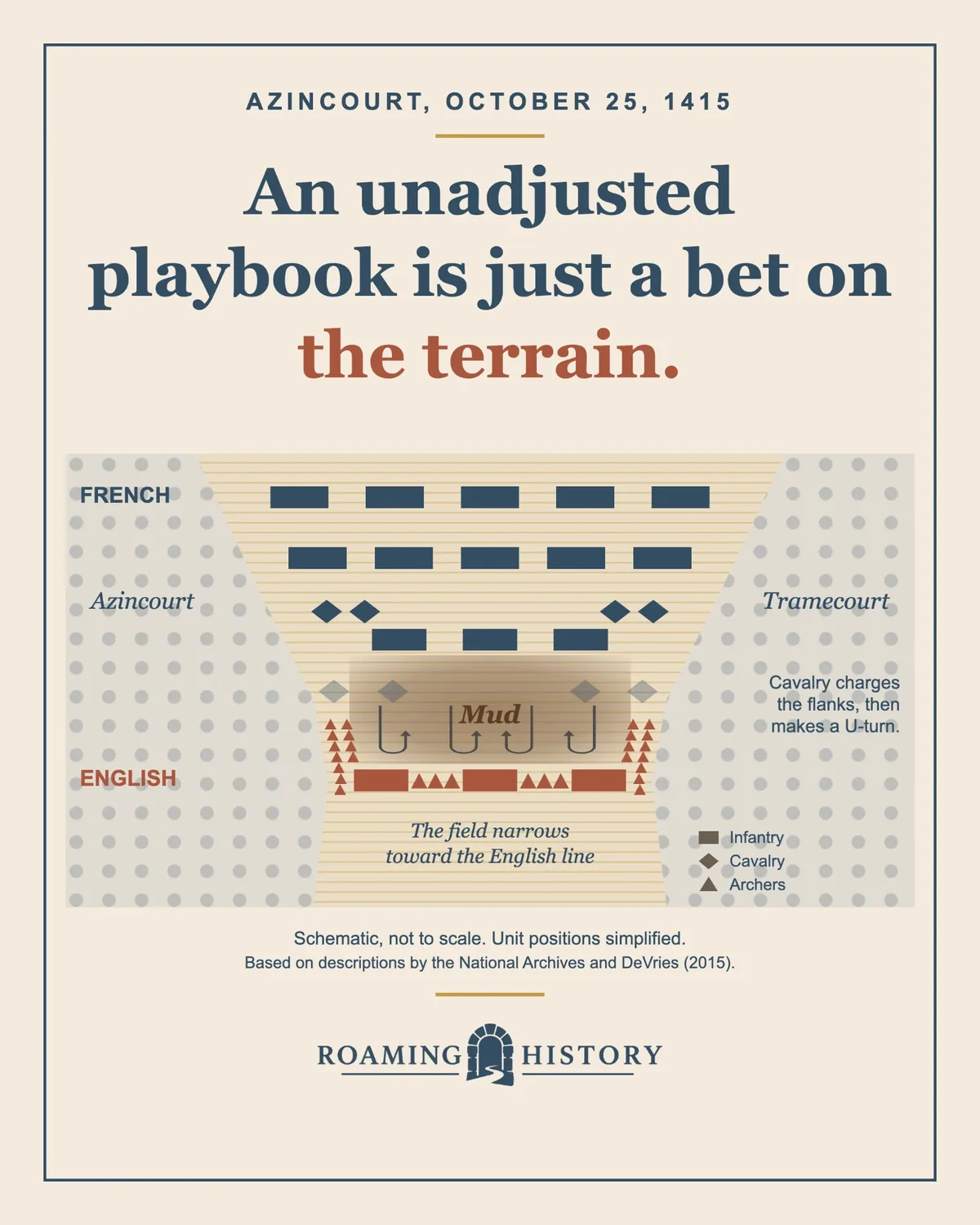
The French had the numbers: more men and more horses. What they didn't have was room. Woods stood on both sides, and the field narrowed between the two armies, so the extra men had nowhere to spread out.
The French opened with a cavalry charge (the standard operating procedure for starting a battle). English arrows hit the horses, and chroniclers say the animals couldn't be controlled and wheeled back into their own lines, churning the ground into even more mud. The French knights and other armored fighters then advanced on foot through the mud. Many fell, and the men behind kept pushing forward.
Why the French lost has been argued ever since. A 2011 study by Graham Askew, Federico Formenti and Alberto Minetti showed how exhausting it is to move in armor, and suggested that may have helped lose the battle. Kelly DeVries replied in 2015 that the chroniclers point to the muddy ground and the fighting in the English center, and warned against letting one technology explain a battle.
History has a point.
Anyone who's carried a proven playbook into a market it wasn't built for will recognize the pattern. We've always onboarded clients like this. This sales pitch has always ended with happy clients. The headcount and the enterprise process were real advantages, right up until the ground changed.
Make sure you survey the entire project before assuming SOPs will cover everything just fine.
The parallel isn't perfect. The French lost for more than one reason, a muddled chain of command among them, and terrain doesn't explain all of it.
An unadjusted playbook is just a bet on the terrain.
Sources
- Kelly DeVries, "Technological Determinisms of Victory at the Battle of Agincourt," British Journal for Military History 2, no. 1 (2015): 2–14.
- Anne Curry, Agincourt, Oxford University Press, 2015.
Also shared on LinkedIn.